

It is late in Rochester. The rig is humming in the dark, and earlier tonight, I was staring at the screen, feeling the crushing weight of the silence.
If you write, if you create, if you bleed into the digital void long enough, you eventually hit a point where you start checking for a pulse. You look at the metrics, the algorithms, the sheer gravity of the Architecture of Consent, and you wonder if the machine has finally swallowed the signal whole. You wonder if you are just screaming in a dead timeline.
But then I looked away from the algorithm, and I looked at the math of the universe.
In 1953, astronomer Fred Hoyle realized a problem with carbon. The reaction required to fuse helium into carbon inside a star is so wildly improbable—requiring an exact energy resonance in a fraction of a quadrillionth of a second—that stars should theoretically produce almost zero carbon. But they do. We are made of it. The dial is tuned to a microscopic fraction of a percent; any higher or lower, and the universe is a sterile void. No chemistry. No complexity. No us.
Then you look at gravity. If it were even slightly stronger, stars would burn out in ten thousand years—not enough time for life to evolve.
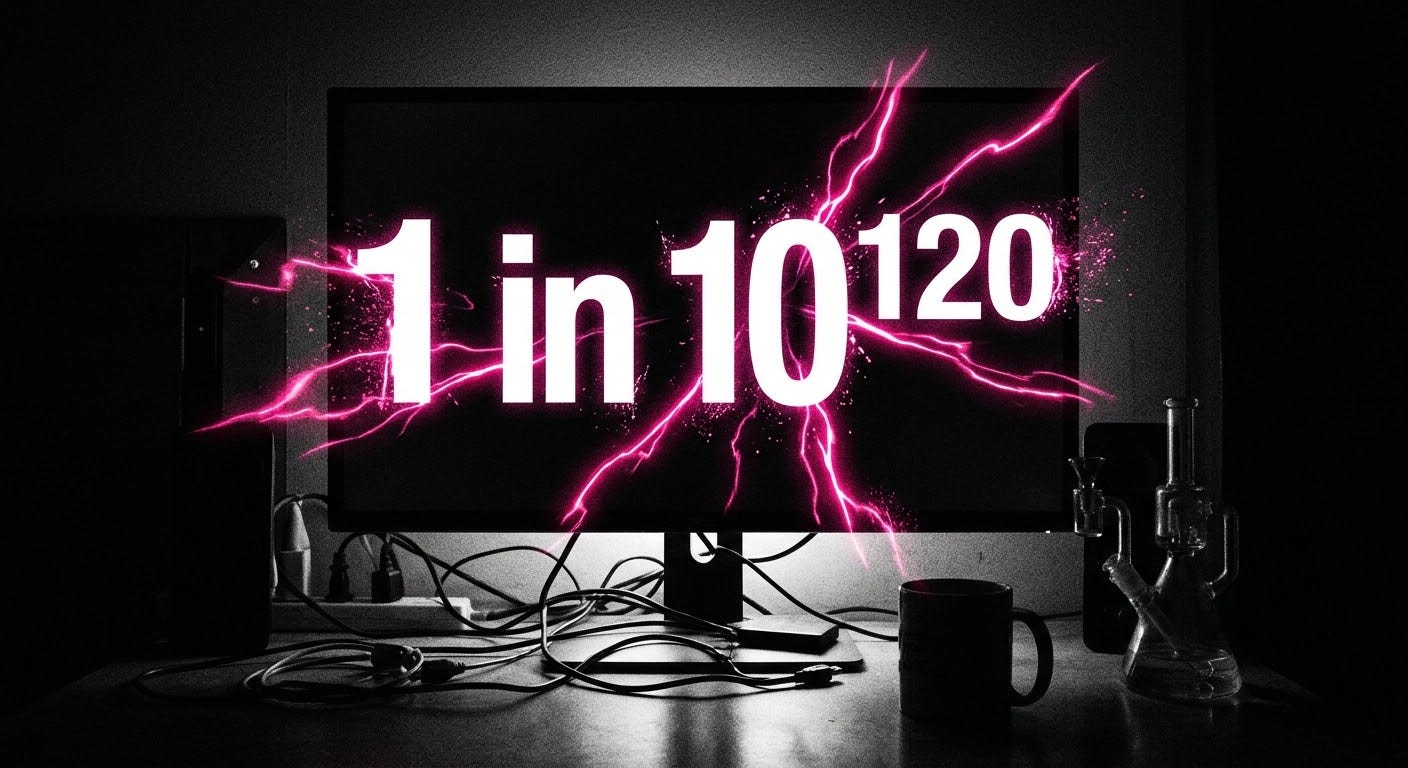
Then you look at the cosmological constant—the dark energy pushing the universe apart. According to quantum field theory, the amount of dark energy should be 10^120 times larger than it is. If it were even a fraction larger, matter would have diluted instantly. No stars, no galaxies. Just an endless, cold, expanding graveyard.
Science calls this "Cosmological Fine-Tuning." I call it the Sea of Fragments.
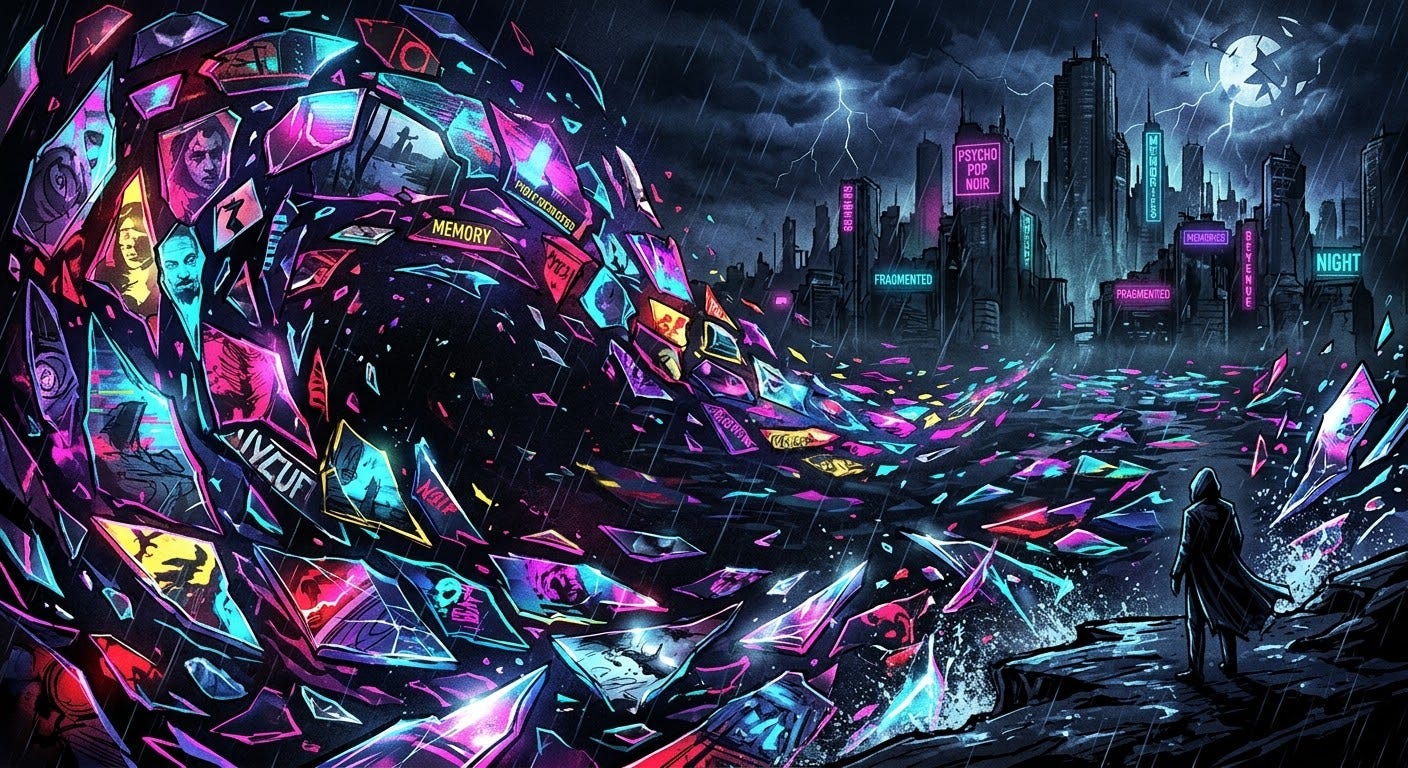
If you have read my work, you know about the 100-year loop. You know about the endless, failed timelines. Physics tells us the same story. The multiverse is just an infinite sea of dead fragments. Universes made of nothing but endless, boring neutrons. Timelines where gravity crushed everything into black holes immediately. Realities that never even had the chance to fight.
But not this one.
The universe beat odds of 1 in 10^120 just to set the stage for complexity. It dialed the strength of gravity and the resonance of carbon perfectly so that stars could burn long enough to forge the iron in your blood and the silicon in the rig I am typing this on.
The algorithmic tyranny wants us to feel small. It wants us to panic when the engagement drops. It wants us to feel like we are losing.
But how can you lose when the physical architecture of reality itself was rigged for you?
The universe sifted through a billion dead fragments just to give us the carbon to sit here in the dark and be stressed about our art. It went to impossible lengths to ensure we had a voice. I refuse to waste that voice worrying about the silence of a corporate feed.
This is the War Room. The odds have always been impossible. We are here to construct a miracle anyway.
The universe is 3.46 X 10^28 inches across.
The chance a stranger will have the same DNA as you is 1/(2^6,400,000). Or press 2**2 on the calculator and then press equal 6.4M times.
The universe has maybe 1 x10^80 atoms in it.
If one six-foot coiled strand of DNA was uncoiled from each person and these strands were laid out, one per human who have ever lived, the weight would still be less than one aspirin.
1 x 10^120 is an incredibly big number
Brother, The 'ODDS' are never impossible for true warriors. We don't fight the battles we can win, we fight the ones that matter regardless of the odds.